

RNG: Casino Random Number Generators
Every kind of casino game involves chance. Statistics can help you consider possible outcomes and chances of winning, but they cannot prevent an unexpected result. At land-based venues, luck affects what happens when cards are shuffled or dice are rolled. Strategies may guide decisions, but they cannot predict the result of a game that depends on chance. Online casinos add a technical element to that uncertainty: RNG, or Random Number Generation, uses an algorithm to produce game outcomes intended to support fair and transparent play. It aims to give players an unbiased basis for play, but an RNG does not promise winnings. Read on for a closer look at how RNG works in online gambling.
What RNG Means and Why It Matters in Online Gambling
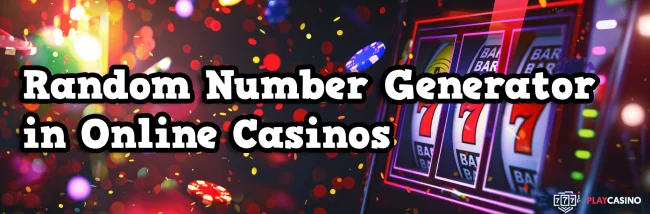
A casino RNG, or Random Number Generator, uses an algorithm to produce a number that should not be reasonably predictable. Online casinos use its output to determine game results. Since a machine generates the values rather than a person selecting them, RNG technology is intended to make deliberate manipulation harder. That alone does not prove a game cannot be manipulated, which is why testing, certification and other controls matter when casinos are accused of rigging games.
Random Number Generators power slot machines in both online and land-based casinos. Online operators also use RNGs for games such as roulette, blackjack, bingo and poker. The implementation varies by game, but the principle is the same: results should be generated independently, not tailored to a particular player. This design gives everyone the same opportunity and is not meant to produce a deliberately biased game.
RNGs became central to online casinos because their outputs are not reasonably predictable or strategically controlled by another player. Although the mechanisms vary, each is intended to produce an unpredictable result rather than a pattern someone can reliably exploit. This is why an RNG algorithm is commonly considered a core component of a trustworthy online game, even though it cannot remove the house edge or guarantee a win.
Random Number Generators Compared with Luck
It is understandable that people call an RNG a modern version of ‘luck’. Results still depend on chance and are not meant to be predicted. Specialists also note that an RNG follows an underlying mechanism, so it may not be random in the everyday sense. It appears random because the process is difficult for an outside observer to predict.
There are several types of RNG, and they do not all work alike. However we distinguish luck from RNG, the technology is not designed to bring good fortune. Its purpose is to give every player an equal opportunity under the game’s rules, not to improve any individual’s chances.
Random Number Generator and Return-to-Player Percentage (RTP)

RNG is sometimes confused with the RTP of online casino games, but the terms refer to different things. RTP estimates how much of the money wagered may be returned over a long period; it cannot predict whether a particular spin or hand will win. For example, a game with 97% RTP is expected to return 97% of the total amount bet over the long run. It does not promise that an individual player will receive that percentage.
Before an RNG algorithm is assigned to a game, the game is given an RTP value. That figure guides the range and frequency of outcomes so that results can align with the stated RTP over many sessions. RNG determines each individual result; RTP describes the game’s long-term statistical return. They work together, but neither predicts a specific win.
How Random Number Generators Work in Online Casino Games
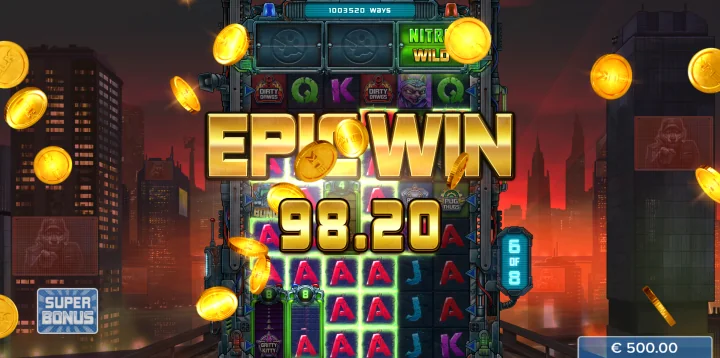
An RNG-based game may use one of two broad types of algorithm. It can rely on a Hardware Random Number Generator, also known as a True Random Number Generator, or a Pseudo Random Number Generator. Both aim to produce random-looking numbers, but their underlying processes are entirely different.
Hardware Random Number Generator (HRNG): An HRNG is a physical device that draws on a mechanical or environmental process. It may collect information such as air temperature or the number of times a player presses a button, then process that input into random values. Those values are passed to the game as its output. Since the environmental information is not normally known in advance, an outside observer cannot accurately predict the number the HRNG will produce.
Pseudo Random Number Generators (PRNG): A PRNG is software based on a mathematical formula. It begins with a supplied value known as the seed and uses it to calculate the numbers it can return. The seed therefore affects the sequence of possible results, even though the output is intended to look random during play.
A PRNG’s resulting value is not always shown as a number. For example, it may select a particular image tile on an online slot. Because the calculation follows a more structured process, some people assume this type of RNG can be predicted. In practice, even someone who knew the seed and formula would find it almost impossible to calculate the exact result accurately before it was produced.
Random Number Generators Compared with Live Dealer Games
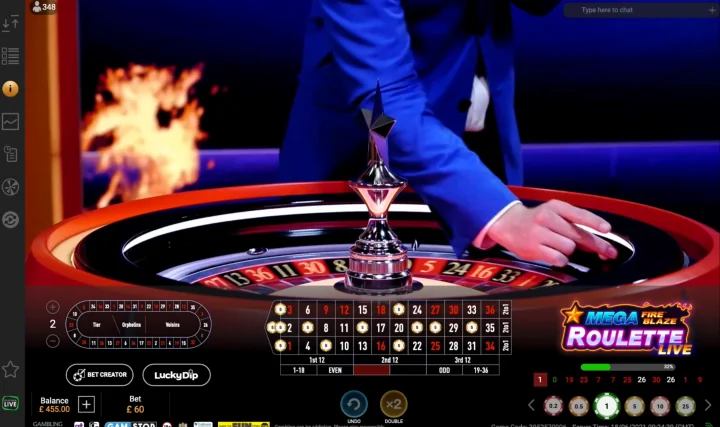
For many years, a live dealer was one of the biggest differences between online casinos and land-based gambling venues. That gap has narrowed as online casinos have added live dealer tables with real people operating wheels and dealing cards, much as they would at a brick-and-mortar casino.
The aim is to bring a casino’s social atmosphere to a player’s screen. Those who want to interact with an actual dealer without leaving home can choose this format. The key question is how a live dealer game differs from one whose result comes from an RNG.
The main difference is the mechanism that determines the result. RNG technology is used for games where chance controls the outcome, including online slots, bingo and blackjack. When blackjack is hosted by a live dealer, the result is not produced solely by an algorithm. Other factors, including the dealer’s way of shuffling or dealing, are also part of the process.
In short, an RNG game relies on an algorithm, while a live dealer game involves human action. Live tables can create the atmosphere of a real casino, but they introduce a small loss of mechanical uniformity. A dealer may not act intentionally, yet individual habits in spinning a wheel or shuffling cards may mean the outcome is not entirely random in the same technical sense.
Players must decide which feature matters more to them. Those who value consistent algorithmic randomness may prefer an RNG game. Those looking for the authentic feel of a physical casino table may accept the human element and its effect on the process.
How Random Number Generators Are Checked for Fairness
If an RNG is intended to support fair play, how can the best online casinos establish that a provider uses it correctly? iGaming providers can have independent third-party companies certify their RNGs. These organizations examine the systems and test games in operation to assess whether the output behaves as randomly as intended. Certification shows that testing has taken place; it does not guarantee a win or a risk-free experience.
Certified RNG games commonly undergo an RNG audit. This matters because players want evidence that their money is being used in a game designed to follow its stated rules, rather than one biased from the outset. An audit can identify system problems, but it does not prevent ordinary gambling losses or guarantee a particular result.
Some providers, including BGaming, also allow bettors to inspect the RNG algorithm through a technical but accessible procedure. Such measures are intended to prevent the RNG label from being applied to a system that is less random or transparent than claimed. Consider them alongside the provider’s certification and other available information.
RNG Certification
Given the role of testing, it is worth looking at how certification works. These are some of the leading agencies that assess online gaming providers and their games:
- eCOGRA (eCommerce Online Gaming Regulation and Assurance): Based in London, this agency assesses fair-game standards for online gamblers and also considers player rights. Its technical specialists closely examine gambling software and games to check whether RNG products meet expected requirements. A provider that passes an RNG audit may receive an eCOGRA certificate. eCOGRA is widely regarded as a prominent name in online gambling licensing and vetting, so providers with its certificate commonly display it.
- iTech Labs: Another leading agency that certifies online gambling systems, iTech Labs accredits companies operating in Asia, the Americas and Europe. Working across different locations, it assesses whether a provider meets the gambling requirements relevant to the region where it operates. In the first stage, specialists review system code for vulnerabilities. The system then undergoes two rigorous testing phases to assess its operation in practice.
- Gaming Labs International: Gaming Labs International works globally, and its certificates are accepted and recognized across gambling markets around the world. It can issue RNG certification after an extensive review of gambling systems, including code checks and technical testing to determine whether outcomes operate as intended.
- BMM Testlabs: This independent laboratory has certified games for over three decades, building a strong position in the gambling industry. Its assessment begins with preliminary testing, followed by quarterly verifications. Experts conduct a range of audits before issuing a certificate and check whether the gaming content meets applicable compliance standards.
At least one certification can help a gaming provider show that its RNG products have undergone external scrutiny. Reputable providers may have several certifications, which can strengthen their standing in the industry, but certificates do not replace personal due diligence. Before choosing any online casino games, review the available standards information and, where offered, try a free-play version to learn the mechanics without wagering.
Strengths and Weaknesses of RNG Casinos
💪 Strengths ⚠️ Weaknesses Transparent gameplay You have to trust the software Games are easy to find Gameplay may be less immersive than live dealer games Fast gameplay Multiple licensing authorities
Final Thoughts
RNG algorithms are widely considered an important compliance tool for online games: they let providers offer varied results without having a person determine every outcome. This supports games designed to be fair and unbiased, though neither certification nor an RNG can promise profits or eliminate the house edge. Whether a system uses an HRNG or PRNG, the algorithm is intended to make each result independent rather than deliberately favouring a particular player.