

Online Blackjack FAQ
Blackjack is one of the most popular online casino games, second only to video slots. This long-running card game was among the first to appear on casino floors and later move online. Microgaming launched the first online casino in 1994, bringing blackjack into iGaming as a digital table game.
Since then, online casinos have added many blackjack formats to their game libraries. Live casino blackjack, streamed in real time by webcam, has also become a popular way to play.
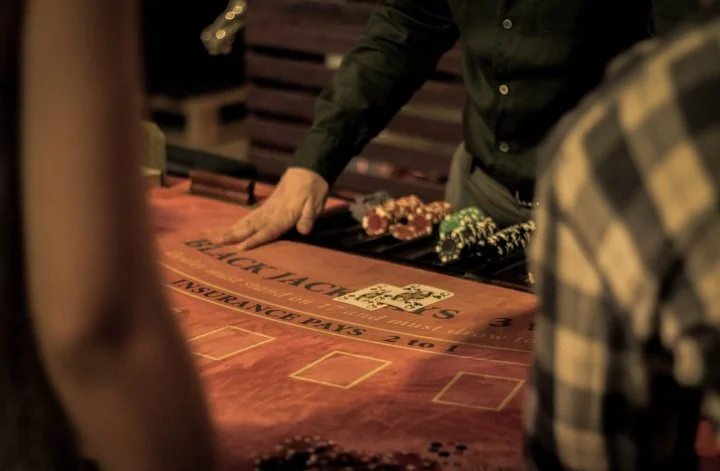
This Blackjack FAQ answers common questions about the rules, gameplay and table formats. Use it to learn how the game works before deciding whether to play at an online casino.
Can I play online blackjack using real money in global currencies?
Yes. Blackjack tables may accept currencies such as GBP, CAD, ZAR, USD and MXN. You will need an online casino with a deposit option that suits you. Once your account is funded, you can choose virtual blackjack or live dealer tables and place bets using on-screen chips. Table limits vary widely: some games start at 0.50 EUR, while others accept bets up to 25,000 EUR.
Can I win real money playing online blackjack?
You can play online blackjack for real money. A hand that beats the dealer without going bust can win, but you can also lose, so set limits that suit your budget. Experts recommend using only 5% of your bankroll for a session and dividing that amount into individual bets; smaller wagers generally last longer. Real-money play can also involve cryptocurrency, including Bitcoin.
What is the best online blackjack game for real-money bets?
Vegas Single Deck Blackjack Gold Series is a virtual table game from Microgaming, with a reported house edge of 0.31% (99.69% RTP), attributed to its single deck and player-friendly rules. For live play, Evolution’s Power Blackjack is noted as a strong choice, with a house edge of 0.23% (99.77% RTP).
Players seeking favourable real-money tables often compare low house edges and high RTPs. These measures describe related aspects of a game’s expected long-term return.
- The house edge estimates the casino’s advantage across many hands.
- RTP, or ‘return to player’, describes the amount players may expect to get back over many hands.
Is blackjack a game of skill or luck?
Chance plays a part in every blackjack hand, but player decisions add an element of skill. You can choose to 'hit', 'stand', 'double', 'split' or 'surrender'. Each choice has different mathematical odds, so good decisions can limit losses and improve results over time. You do not have to guess: blackjack strategy charts compare your hand total with the dealer's face-up card and recommend the move with the strongest chance of success.
What is the highest-ranking blackjack hand?
A natural blackjack is the top hand: an Ace and a card worth 10 (10, J, Q or K) make 21. This hand cannot lose, although table rules determine how ties and dealer naturals are settled. In general, the aim is to finish with a total higher than the dealer’s without going over 21.
What is the best blackjack strategy?
Basic strategy uses a chart based on mathematical analysis. It compares your hand total with the dealer's face-up card and suggests whether to 'Hit', 'Stand', 'Split', 'Double' or 'Surrender'. Following the recommended move is intended to reduce losses and improve expected results.
- Minimizing your losses: Suppose a 'hit' gives you a 22% chance to win, compared with 28% for 'stand'. Even if both choices are unfavourable, the chart recommends 'stand' in this example because it loses less often.
- Maximizing your winnings: A chart can also show which choice is stronger when either could win. In the opposite example, 'hit' has a 74% chance of winning, while standing has a 67% chance. The chart points to 'hit' as the better option, based on the 75% winning chance.
With practice, the chart’s recommendations can become familiar. Online players can keep it open nearby or display it on another screen as a reference during play, which is less convenient at a physical casino table.
Does a hand total of 21 mean I automatically win?
No. A total of 21 can tie, or 'push', against the dealer’s 21, depending on the table rules. Some tables pay a player’s natural blackjack (A 10) even if the dealer also has a natural; at others, matching naturals push. A 3-card or 4-card 21 does not beat the dealer’s natural blackjack, and the same applies in reverse.
What should I avoid when playing blackjack?
Some familiar-sounding options may offer poor value under certain rules. The guide advises against insurance, stating that the chance of the dealer having a 10 card with an Ace is 33.33% and the expected rate for the dealer on this bet is 66.33%. These figures reflect the stated claim; the value of insurance depends on the game and the card information available.
The guide also recommends avoiding these plays:
- Taking insurance
- Splitting 10s
- Choosing to ‘hit’ or ‘stand’ on 8-8 or A-A
- Counting cards at RNG tables
- Making side bets
- Hitting a hand total of 17
- Playing tables that pay 6-5 blackjack
Where can I play blackjack online?
Many online casinos offer blackjack. Virtual RNG tables are usually in the table-games section, while streamed games appear in the Live Casino lobby. Before you choose a casino, compare its games, terms and payment options.
- Can casino bonuses be used at blackjack tables?
- Are the games’ bet limits suitable for my budget?
- Can I deposit and play in my preferred currency?
- How many blackjack formats are available?
- Does the casino hold an iGaming licence that offers player protection?
Which online blackjack tables offer the best odds?
Tables with player-friendly rules generally offer better odds. More decks in the shoe raise the house edge: an 8-deck game is estimated to add 0.57%, making deck count one factor to compare. Other rules matter too. A dealer who hits on soft 17 increases the edge by 0.22%; rules that prohibit splitting Aces give the house a 0.45% edge. The guide says early surrender gives the player a 0.61% advantage.
Other rules associated with a lower house edge include:
- Dealer stands on every 17
- Doubling is allowed on any total
- Doubling after a split is permitted
- Players may split more than once
- Splitting Aces is allowed
- The 5-card Charlie rule applies
- Early surrender is available
Finding the Right Blackjack Table for You
Blackjack comes in many variants, and differences in the rules can make one version a better fit than another. The basic gameplay is familiar across formats, but the details vary.
In Double Exposure, both dealer cards are visible, but a natural blackjack pays only 1:1 (even odds). Evolution's Power Blackjack removes all cards with a value of 10 from the deck. Free Bets Blackjack offers free double-down and split bets. Traditional blackjack is another option, including tables with 6 decks where the dealer stands on 'any 17' rather than only on 'hard 17s'.
You can also choose live blackjack with real-life dealers or multi-hand games that offer several seats at the same table. RNG blackjack provides a more private virtual-table experience without a live dealer.
Whichever format you prefer, learn its rules and the mathematics behind the decisions first. A basic strategy chart can guide your choices from hand to hand. It may help reduce losses, but blackjack outcomes remain uncertain.