

American Roulette Guide: Strategies and Tips
American Roulette features a distinctive wheel, a wide choice of wagers and a higher house edge than European Roulette. This guide covers the rules, table sections and common betting systems, while separating practical bankroll habits from claims no system can substantiate. Whether you are new to the game or know the basics, these details can help you understand the choices and play with clearer expectations.

Key Takeaways
- American Roulette has a higher house edge than European Roulette. Understanding the layout and available wagers helps explain how the game works.
- Martingale, Paroli and Labouchère are systems players may use, but each has drawbacks and calls for caution.
- Budgeting, choosing wagers thoughtfully and using learning resources are important parts of a considered approach to American Roulette.
American Roulette Basics
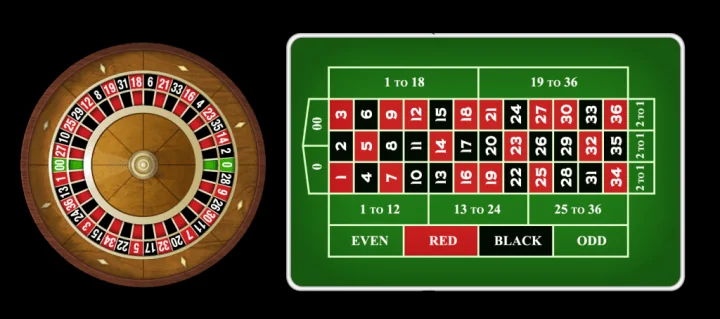
American Roulette is a casino table game played in the United States and elsewhere. The aim is to predict the numbered pocket where the ball will stop. Bets can cover a single number, a row or neighbouring numbers, and a winning single-number wager pays 35 to 1; 0 and 00 are also on the layout. This version differs from other roulette formats because its wheel has both a green zero and a green double zero, its number order differs, and it offers an additional wager called the Basket or Five bet.
A good grasp of the wagers and the 0 and 00 is useful when playing American Roulette. These pockets affect the probabilities, so learning their positions on the wheel helps clarify what each bet covers. The sections below take a closer look at the wheel, table and house edge.
The American Roulette Wheel
The American Roulette wheel has 38 pockets: numbers 1 to 36, plus 0 and 00. On the wheel, 0 sits between the red numbers 2 and 28, while 00 is between the black numbers 1 and 27. This arrangement shapes the betting choices and house edge. The extra 00 pocket, absent from the European roulette wheel, raises the American version’s house edge to 5.26%. It also reduces the player’s chance of winning, making this format more demanding.
Knowing the wheel’s sequence and the distribution of its red and black pockets can help you read the layout and understand your wagers. That familiarity gives context to the choices available, though it does not change the outcome of a spin.
Table Layout and Betting Options
The American Roulette layout shows numbers 1 to 36, a zero and a double zero arranged in three columns. The betting area has two broad sections: inside wagers on the number grid and outside wagers around it. Inside bets generally pay more but have lower odds of winning. They include Straight-Up, Split, Street, Corner, Five and Line bets. Outside bets cover groups or characteristics of numbers and tend to offer lower payouts with a greater chance of winning. Examples include Red or Black, Odd or Even, High or Low, Dozen and Column bets.
Compare a wager’s odds and payout with the house edge before choosing it. Beginners may find outside bets such as red or black, odd or even, and high or low easier to understand; these offer the most advantageous odds. With more experience, you might consider inside bets, which can pay more but carry greater risk.
Understanding the layout and different wager types gives you a clearer basis for making choices and learning the game.
House Edge in American Roulette
The house edge is the casino’s mathematical advantage. In American Roulette it is 5.26%, compared with 2.7% in European Roulette. The double zero accounts for the higher edge: over the long run, players are expected to retain 94.74 units for every 100 units wagered.
The Basket bet is an exception to the general house-edge figure. Covering 00-0-1-2-3, the five numbers at the far end of the table, it has a house edge of 7.89%. Understanding how the edge affects expected results can inform bet selection and bankroll decisions.
American Roulette Betting Strategies
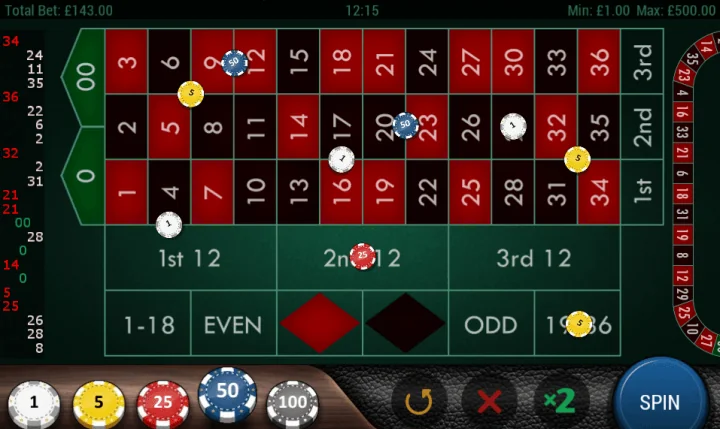
No system can make American Roulette produce consistent wins, but a betting approach may add structure to play. Popular roulette betting strategies include Martingale, Paroli and Labouchère. Each works differently and has trade-offs, so consider your preferences and available bankroll before trying one.
Understand a system’s logic and risks before using it. Martingale, for example, is a negative progression method: after each loss, the wager doubles in an attempt to recoup earlier losses with a later win. It cannot ensure a profit, and a losing streak may require a substantial bankroll.
Paroli takes the opposite, positive-progression approach and aims to make use of a winning run. It is often considered more conservative than Martingale, but still has limitations. Comparing each system’s strengths and weaknesses can help you decide whether its structure suits your play.
Martingale Strategy
The Martingale Strategy doubles the wager after each loss in an attempt to recover previous losses with a subsequent win. Its simple premise may appeal, but it has significant limits. A lengthy losing streak can demand a large bankroll, and long-term profit is never assured. If a win does not come soon enough, losses can mount.
Martingale is easy to follow and may recoup losses quickly when a win occurs, but its risks call for care. Consider how you would handle a losing streak before using it. No system ensures regular wins; budgeting and setting wager limits remain important.
Paroli System
Paroli is a positive-progression system intended to take advantage of winning streaks. Players choose a base unit, add one unit to the next wager after a win, and subtract one unit from the following wager after a loss. The method can increase wagers during a winning run and limit them during a losing run.
Although Paroli is more conservative than Martingale, decide in advance how much you are prepared to wager and stick to that limit. Understanding the house edge and odds of winning also matters when using this approach.
Stick to your plan and avoid chasing losses. Discipline with wagers is central to using Paroli in American Roulette.
Labouchère System
The Labouchère system uses a sequence of numbers to set and adjust wagers. It is a negative-progression system, so a loss leads to larger bets. Players cross numbers off the sequence as they win, aiming to complete it at a profit. This method carries risks and cannot guarantee a positive result.
Labouchère combines negative progression with preset boundaries. The sequence is intended to help track wagers and, after wins, reduce them gradually; its underlying assumption is that wins will recover losses as the sequence is completed. That may not happen during a losing run, so the method has limits like any other betting system. Manage your bankroll and set firm wager limits rather than expecting consistent wins.
Tips for Playing American Roulette

A few practical habits can add structure to an American Roulette session. Keep these points in mind:
- Set a spending limit and stick to your budget. Managing your bankroll helps protect it and supports responsible gambling.
- Consider the odds when selecting wagers. New players might begin with outside bets—red or black, odd or even, or high or low—which have the most favourable odds.
- As you become more familiar with the game, you may move to inside bets, which pay more but carry greater risk.
These habits can help you approach American Roulette with clearer limits and a better understanding of your choices.
Online learning materials can also help you become familiar with American Roulette. Some platforms offer tutorials and free play, where you can review rules and strategies without wagering. These resources may deepen your understanding and help you consider your options before playing.
Bankroll Management
Careful bankroll management is an important part of playing American Roulette. These steps can help:
- Decide how much you can set aside for a session, then build a budget around that amount.
- Plan how to divide your budget among the wagers you expect to make.
- Do not exceed your budget, even when you feel tempted to keep playing.
Following a budget helps you track your bankroll and play responsibly.
Set clear limits on both wagers and play before you start. These reminders can help you stick to them:
- Be honest and realistic about what you can afford to lose and how much time you can spend playing.
- Do not raise your limits, even if a winning streak makes it tempting.
- The house has an advantage, so set your limits in advance and stick to them.
Choosing the Right Bets
Thoughtful wager selection can help you learn the game and keep expectations realistic. Compare each bet's odds and payout with the house edge. Outside bets such as red or black, odd or even, and high or low may suit beginners; they offer the most favourable odds. With more experience, you could explore inside bets, which pay more but carry greater risk.
Knowing the table layout and what each wager covers makes it easier to compare your options. Review the odds and payouts for each bet alongside the house edge to choose wagers that suit your approach.
Common American Roulette Myths and Misconceptions

Some beliefs about American Roulette can lead to mistaken expectations. The Gambler’s Fallacy, for example, is the idea that earlier results influence what happens next. Each wheel spin is independent, however, so the probability of an outcome does not change because of previous results.
Another misconception is that a betting system can secure regular wins. No system can guarantee this. The house edge gives the casino an advantage over the long run.
Recognizing these misconceptions can help players make decisions with a clearer view of the game. Set a budget, stay within wager limits and understand the bets you choose; these habits can help keep the experience in perspective.
The Gambler’s Fallacy
The Gambler’s Fallacy can prompt irrational bets in American Roulette. It rests on the mistaken belief that previous outcomes affect future ones. In fact, every spin is a separate event, and past results do not change the likelihood of a particular result on the next spin.
Knowing about the Gambler’s Fallacy can help you avoid treating a pattern of past results as a prediction. Each spin remains independent, so earlier outcomes do not determine the next one. Keeping this in mind supports informed choices, without changing the odds of success.
Betting Systems That Guarantee Wins
Some systems, including Martingale and Labouchère, are promoted as ways to guarantee American Roulette wins. No betting approach can ensure consistent victories. The house edge gives the casino an advantage over the long run, and a system cannot remove it or promise a steady stream of wins.
Be wary of claims made for betting systems, and weigh their limitations and risks. No system guarantees regular wins. Set wager limits, manage your bankroll and understand the terms of each bet for a more measured approach.
Playing American Roulette Online
Playing American Roulette online can be convenient, with a broad choice of games and opportunities to practise without wagering. The two main formats are Live Dealer and RNG-based roulette. Live Dealer games stream a dealer and wheel, while RNG games use a computer-generated random number generator to determine each spin. They provide different experiences, but neither alters the game’s underlying probabilities.
Whether you prefer Live Dealer or RNG-based American Roulette, online learning tools can help you understand the game. For example, you can:
- Try free play to practise and become familiar with the rules.
- Read tutorials and guides to learn about betting approaches and strategies.
- Use interactive calculators and tools to explore odds and compare betting options.
These resources can help you learn how the game works and consider how different choices affect your play.
Live Dealer American Roulette

Live Dealer American Roulette lets you watch the wheel and ball in real time, and you may be able to contact the dealer through chat or a microphone. Watching each spin can feel more interactive than RNG-based roulette, where a computer determines the result.
Fairness in Live Dealer American Roulette is supported by proper licensing and inspections of the wheel mechanics to check for bias in favour of the house. This format brings the view of a casino-style wheel into your home, with the convenience and variety of online play.
RNG-Based American Roulette
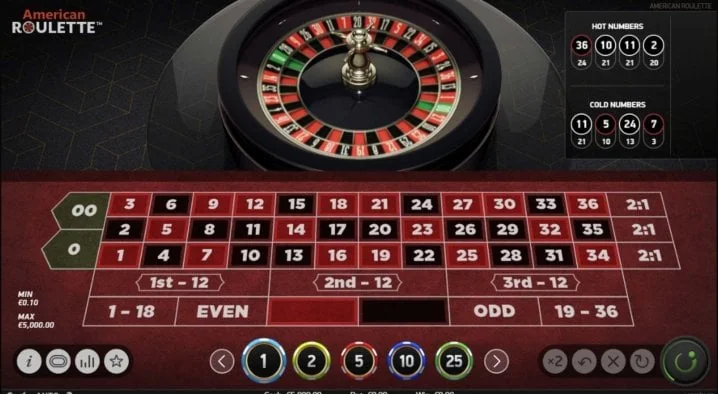
RNG-based American Roulette uses a computer-generated random number generator to determine each spin. With no live dealer or other players, this automated format lets you play roulette online at your own pace and try different betting approaches in a more controlled setting.
The review describes RNGs at online casinos offering American Roulette as reliable, stating that gambling regulators have registered and approved the generators used by online casinos. This is the review’s description and does not establish that a casino is authorized in any particular jurisdiction. RNG games combine the convenience and variety of online play with the familiar roulette format.
Summary
American Roulette offers a variety of wagers, but its double-zero wheel and house advantage are worth keeping in mind. Learning the layout, distinguishing betting myths from the rules, and consulting online references can help you make more informed choices, though none can guarantee a win. Live Dealer and RNG-based games present the action differently, but budgeting and setting wager limits are useful habits in either format. Choose your bets carefully, keep the house edge in perspective, and treat each spin as entertainment.